


When Living Alone Becomes a Safety Risk for Adults Over 65

One in Five Seniors Who Fall Waits an Hour for Help
One of the five older adults who fall at home is still on the floor an hour or more later. Lying there that long roughly doubles the chance the fall proves fatal, even when the fall itself caused no serious injury.
About 27% of Americans over 65 live alone, roughly 15 million people. For each of them, a fall at home starts a clock that no one else is watching.
A Life Assure analysis of U.S. and Canadian government data finds that the danger of aging alone has less to do with the fall than with the gap that follows, the stretch of time before anyone knows to help. Living alone is rising across North America. To find where the danger runs highest, the analysis scored the risk across U.S. life stages and states, and set the results against the Canadian picture.
Key Findings
-
About 1 in 5 older adults who fall are left on the floor for an hour or more, and a long time down roughly doubles the risk of death.
-
Wisconsin has the highest senior fall death rate in the country at 158 per 100,000, more than five times Alabama's 30.
-
Fall deaths among older adults have risen about 21% in the United States since 2018 and about 51% in Canada since 2017, faster than the senior population has grown.
-
Within the senior years, the fall death rate climbs from 19 per 100,000 at ages 65 to 74 to 339 at 85 and older.
-
On the Home-Alone Risk Index, adults 65 and older score 100 while midlife adults score just 14, so the risk concentrates in later life rather than building steadily with age.
-
About 27.3% of U.S. adults 65 and older live alone; in Canada the share runs from 21% at ages 65 to 69 to 42% at 85 and older.
-
Canadian seniors die from falls at a higher crude rate, 98.2 per 100,000 in 2022, than U.S. seniors at 69.9.
The hour after a fall
A fall at 30 is usually a bruise and a story. After 65 it is one of the most serious things that can happen at home, and falls are the leading cause of injury death for older adults in both the United States and Canada. Falls themselves are far more common than fall deaths, about 1 in 4 U.S. adults 65 and older report one each year and the World Health Organization puts the global figure closer to 1 in 3.
The injury is only part of the danger. What happens next matters just as much. A person who falls with someone nearby gets help within minutes. A person who falls alone can spend far longer on the floor. Researchers call this a long lie, and about 1 in 5 older adults who fall are left on the floor for an hour or more. A 2012 meta-analysis in the Journal of the American Geriatrics Society found that a long time on the floor roughly doubles the risk of death, through complications such as dehydration and pressure injuries.
This is where living alone changes the odds. According to a Pew Research Center analysis of federal time-use data, older adults who live by themselves spend more than 10 hours of the average day with no one else present, so an unwitnessed fall is the ordinary case rather than the exception. A cohort study of people in their nineties found 82% of their falls happened while they were alone, about in line with how much of their time is spent that way. When a fall happens, someone who lives alone is unlikely to have anyone nearby to shorten the wait.
Where a fall is deadliest
Fall mortality among older adults is not spread evenly across the map. Among U.S. adults 65 and older, the rate ranges from 158 per 100,000 in Wisconsin, the highest, down to 30 in Alabama, the lowest, a gap of more than fivefold. Minnesota and Maine round out the three highest.
Some of that spread reflects how deaths are recorded rather than how often they happen. The CDC has noted that the gap between high-rate states like Wisconsin and low-rate states like Alabama partly reflects differences in how deaths are coded and investigated, and the makeup of each state's older population, since fall death rates run higher among older white adults. The ranking is best read as a guide to where falls are recorded as the cause of death, and the states near the bottom may be undercounting rather than genuinely safer.
The rate keeps climbing past 75
The senior years are not one stage but several, and the danger steepens with each one.
The fall death rate rises from 19 per 100,000 at ages 65 to 74, to 75 at 75 to 84, to 339 at 85 and older. The oldest group faces a rate nearly 18 times that of the youngest seniors. Disability climbs alongside it, reaching 46.5% of the 75-plus group. These are also the years when living alone is most common, so the people at the highest risk of a fatal fall are among the most likely to be home with no one else present.
Two curves are converging
Two trends are moving toward the same households at the same time.
Living alone is at a record high. One-person households are now the most common household type in Canada, at 29.3% of all households, and the U.S. is close behind at 28.5%. At the same time, deaths from falls among older adults are climbing faster than the growth of the senior population would explain. The U.S. age-adjusted rate rose about 21% from 2018, and in Canada senior fall deaths rose about 51% between 2017 and 2022, from 4,752 to 7,182.
The gap between the two countries is itself notable. In Canada, the crude fall death rate for adults 65 and older reached 98.2 per 100,000 in 2022, above the U.S. rate of 69.9 in 2023. The two figures use the same fall definition in adjacent years, so the comparison is approximate rather than exact, but Canadian seniors die from falls at a higher rate than their U.S. counterparts.
Why the two differ is not established. Both are crude rates, so part of the gap may reflect the age mix within each senior population, and Canada's higher life expectancy means more Canadians reach the oldest ages where falls turn fatal. Common chronic conditions add to the stakes: about 1 in 8 Canadians over 40 live with diagnosed osteoporosis, which makes a fall more likely to break a bone. These are possible contributors rather than a settled explanation, and differences in how each country codes deaths can affect the comparison as well.
Where the risk concentrates
Risk does not build at an even pace across adult life. It stays low for decades, then rises sharply in a narrow window.
The Home-Alone Risk Index shows the shape of that rise. Adults 18 to 34 sit at 0 and midlife adults at just 14, then the score jumps to 100 for adults 65 and older. The distance from midlife to later life is far greater than the distance from youth to midlife, which is the finding: the danger is concentrated at the senior transition rather than spread evenly across the years.
Two measures drive it, and both climb together in later life. About 27.3% of U.S. adults 65 and older live alone, against 8.8% of young adults. In Canada the share is comparable and rises with age, from 21% of those 65 to 69 to 42% of those 85 and older. Disability follows the same path, reaching nearly 33% of adults 65 and older against 7.7% of young adults. A disability does not cause a person to live alone, and living alone does not cause a disability. The two simply concentrate in the same years, so the group most likely to be home by itself is also the group least able to manage an emergency without quick help.
Takeaway
The numbers do not argue that older adults should stop living alone. Most want to stay in their own homes, and most can. What the data adds is a sense of timing and of stakes. The risk climbs in the senior years and again after 75, and how a fall ends is most often settled by the time that passes before anyone knows.
That time is also the one part of the picture a household can change. For families watching a parent age at home, it turns a vague worry into a concrete question with a concrete answer.
Methodology
[i] To understand when living alone becomes a safety risk across adult life, Life Assure built a Home-Alone Risk Index from official government data rather than from a survey. The index compares three life stages, young adults (18 to 34), midlife adults (35 to 64), and older adults (65 and older), on a 0-to-100 scale. [ii] Each stage receives a score built from three measures: the share of people who live alone, drawn from the U.S. Census Bureau's American Community Survey 2019-2023 5-Year Estimates (Table B09021) and weighted at 40%; the share who report a disability, from the same survey (Table B18101) and weighted at 30%; and the unintentional fall death rate, computed from the CDC National Center for Health Statistics 2023 mortality file and reproducing CDC Data Brief No. 532, weighted at 30%. Because the index is scaled from the lowest to the highest of the three life stages, the youngest group anchors at 0 and the oldest at 100 by construction. The informative value is where the middle group lands: at 14, midlife sits far closer to young adults than to seniors, which is what shows the risk concentrating in the senior transition rather than building evenly with age. [iiI] Fall death rates in the body are crude rates for 2023, about 70 per 100,000 for adults 65 and older nationally. The 21% increase since 2018 is measured on an age-adjusted basis, from 64.7 to 78.4 per 100,000 by 2024 in CDC WONDER, which corrects for shifts in the age mix and is not directly comparable to the crude rate. The Canadian rate of 98.2 per 100,000 in 2022 is a crude rate from the Public Health Agency of Canada that excludes Yukon and uses the same fall definition (ICD-10 codes W00-W19). [iV] Canadian context is drawn from Statistics Canada's 2021 Census (living arrangements) and the Public Health Agency of Canada (fall data and osteoporosis prevalence), with peer-reviewed research on outcomes after a fall and international comparison from the World Health Organization. State-level variation in fall mortality is affected by death-certificate coding and investigation practices, as noted by the CDC. The fall death rates in this study describe all adults in each age group. They are not specific to people who live alone, and the index measures where exposure and stakes overlap by life stage rather than showing that one factor causes another.Fair Use Policy:
[i] Users are welcome to utilize the insights and findings from this study for noncommercial purposes, such as academic research, educational presentations, and personal reference. When referencing or citing this article, please ensure proper attribution to maintain the integrity of the research. Direct linking to this article is permissible, and access to the original source of information is encouraged. [ii] For commercial use or publication purposes, including but not limited to media outlets, websites, and promotional materials, please contact the authors for permission and licensing details. We appreciate your respect for intellectual property rights and adherence to ethical citation practices. Thank you for your interest in our research.About The Author

About Life Assure
Life Assure is the highest rated and reviewed medical alert provider in Canada. With years of experience providing safety to seniors, Life Assure has become trusted by thousands of Canadians to keep them safe in case of emergencies such as falls.
Related Articles
Parkinson’s Awareness Month

April is Parkinson’s Awareness Month, a time to share information, raise awareness, and support those affected by Parkinson’s disease (PD).
Read MoreFall Prevention Month

Every November, Fall Prevention Month is observed across Canada to bring attention to a serious and growing issue - fall related injuries among older adults.
Read MoreTop Risk Factors for Alzheimer's Disease: What You Need to Know

Alzheimer's is a slowly progressive neurodegenerative disorder, a classically described major cause of dementia, and millions around the globe are victims of it.
Read MoreHow to Prevent Falls: Practical Advice for Caregivers

Falling down can be a horrible experience and, in addition, it can be very traumatic for your body and mind. Especially, if you are a senior then a fall can be the cause
Read MoreHow A Medical Alert Can
Help During An Emergency
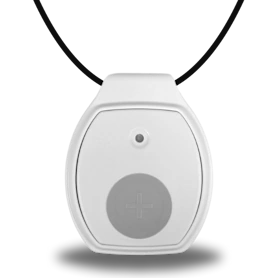

 Get Help With The Push Of A Button
24/7 Monitoring Anywhere In Canada
Usable In The Rain Or Shower
Automatic Fall Detection Available
We have collected 4 things that
will help you live protected and healthy
-

Not sure which device
Take our product quiz!
works best for you? -

Looking for information
Read our blogs!
and tips on senior lifestyle? -

Consider getting medical
At home or on the Go!
alert device to stay safe -

Ready to get your device?
Visiting our order page!
You can order a device by