

The Landline Myth: Why Most Older Adults In North America No Longer Answer The Wall Phone

Why Most Older Adults in North America No Longer Answer the Wall Phone
When a severe weather alert goes out, most people now expect it to land on a phone in their pocket. Public-safety planners on both sides of the border have long assumed older adults were the exception, still tethered to a landline. New federal data from the U.S. and Canada show that assumption is roughly a decade out of date.
Life Assure analyzed five federal datasets from the CDC, NTIA, U.S. Census Bureau, and Statistics Canada to map how older adults across North America actually communicate today. According to the CDC's National Health Interview Survey, 74.6% of U.S. adults aged 65 and older now rely primarily on a cell phone. Only 12.3% still lean mostly or entirely on a landline. In Canada, Statistics Canada reports that 82.6% of seniors used the internet in 2022, and the share of Canadian households with no landline has climbed to 52.2%. The U.S. and Canada are moving at different speeds in the same direction.
Public sentiment hasn't caught up in either country. AARP's 2025 Tech Trends report found that two-thirds of U.S. adults 50-plus say technology makes daily life easier, yet most also feel products and emergency tools aren't designed with them in mind. Statistics Canada's own analysis describes Canadian seniors as "more connected than ever."
Key Findings
-
74.6% of U.S. adults 65+ rely primarily on a cell phone, when wireless-only and wireless-mostly users are combined.
-
Just 12.3% of U.S. seniors still rely mostly or exclusively on a landline.
-
82.6% of U.S. adults 65+ live in households with both broadband and a computer.
-
89.6% of British Columbia seniors used the internet in 2022, the highest rate of any province.
-
52.2% of all Canadian households are now cell-only, up sharply from prior decades but roughly 26 percentage points behind the U.S. rate of 78%.
-
The Senior Emergency Connectivity Index ranks Utah (93.3) first across all 61 jurisdictions; New Brunswick (6.6) ranks last, behind even the lowest-scoring U.S. state.
-
The top 10 ranked jurisdictions are all U.S. states. The highest-ranked Canadian province, British Columbia, lands at #11.
Landline-Based Outreach Has Aged Out
Five years ago, a typical emergency-management briefing in either country might have flagged landline-based protocols as a baseline tactic for reaching older residents. Reverse 911 systems and automated robocalls assume a fixed line tied to a physical address. That assumption was anchored in real data once. It is no longer anchored.
In the U.S., the CDC's July–December 2024 release shows just 4.3% of seniors live in landline-only households. Another 8.0% are landline-mostly. The remaining 87.7% have moved on. Canada has followed the same arc more slowly. Saskatchewan now leads the country with 59.5% of households cell-only; Newfoundland and Labrador sits at the other end at 31.3%. Canada trails the U.S. by roughly a decade of adoption, but the curve looks the same.
A phone-tree protocol built around landlines now misses many of the people it was designed to protect.
Older Adults Across North America Are Already Online
82.6% of U.S. adults 65+ live in a household with both broadband and a computer. The Canadian equivalent measure, internet use from any location, comes in at 82.6% for seniors in 2022. The two surveys define connectivity slightly differently, so the matching figures are coincidental, but the directional story is consistent: roughly four in five North American seniors are online. British Columbia (89.6%), Ontario (85.4%), and Alberta (84.3%) all sit above the Canadian average.
AARP adds texture for the U.S.: older adults own an average of seven tech devices, led by smartphones (91%), smart TVs (78%), and tablets (62%). Canadian smartphone adoption among adults 50-plus reached 72% in recent Pew Research tracking. Each of those devices is a potential alert channel that the average county or provincial emergency-management plan does not currently use. Being online does not automatically enroll a person in Wireless Emergency Alerts or Alert Ready notifications, but the capacity is there. What's missing is awareness and enrollment, not access.
Why Some Older Adults Choose to Stay Offline
About 17% of U.S. adults 65+ live in households without both broadband and a computer (U.S. Census ACS 2023). Surveys of non-adopters consistently find that for the majority of offline seniors, the barrier is not access but preference, driven by privacy concerns, scam exposure, and difficulty finding senior-tailored tech support.
AARP research identifies data privacy as the single largest barrier to tech adoption among older adults, cited by roughly one-third of respondents. Concerns about online scams add to the hesitation. The FBI's 2024 IC3 Elder Fraud Report found adults 60+ lost $4.885 billion to internet-based fraud in 2024, the highest losses of any age group. Reaching this slice of the population means meeting them where they are: local TV and radio, NOAA weather radios in the U.S., Environment and Climate Change Canada bulletins across the border, and neighbor or family check-ins.
Regional Gaps Cluster in Familiar Places
The Senior Emergency Connectivity Index, which combines digital connectivity for seniors with cell-only household adoption, places Utah at 93.3 out of 100. West Virginia sits at 31.9. The top 10 jurisdictions are all U.S. states with younger overall populations and more recent telecom investment. The bottom of the U.S. ranking, West Virginia, Mississippi, and Louisiana, sits across Appalachia and the Deep South.
Canada's pattern looks familiar. British Columbia leads at 77.6, edging into the U.S. top tier. The three lowest-ranked jurisdictions across the entire index are Atlantic Canadian provinces: New Brunswick (6.6), Nova Scotia (21.8), and Newfoundland and Labrador (24.1). The drivers are also familiar: older populations, more rural geography, and longer-tenured residents who installed landlines decades ago and never had a reason to switch.
For provincial emergency managers in Fredericton or Halifax, the implication is practical. A cell-first alert strategy that works in Vancouver or Calgary will leave large pockets unreached in the Maritimes. Keeping landline-based outreach as a primary channel, not a fallback, remains the right call in those regions.
How the Two National Alert Systems Compare
Modern emergency communication on both sides of the border increasingly runs on cellular. In the U.S., Wireless Emergency Alerts have been the foundation since 2012, pushing loud, automatic notifications to nearby cell phones during severe weather, AMBER alerts, and other emergencies. Canada launched its equivalent, Alert Ready, in 2015, with wireless distribution mandated for all LTE-capable devices as of April 2018.
Both systems share the same gap. They reach the cell phone in a person's pocket. They do not reach the wall phone in the kitchen, the resident who has opted out of the internet, or the senior living alone who has set their device to silent. Layering matters: WEA and Alert Ready as the foundation, landline outreach retained as a primary channel for the regions and households that still depend on it, and human check-ins for older adults who live alone. About 26.5% of U.S. adults 65+, roughly 14.8 million people, live by themselves. Canadian data show a comparable share, particularly among women.
For families, the questions are practical. Does every older relative have a working cell phone with an active data plan? Is anyone in the household still primarily on a landline? If a relative lives alone, who actually calls to confirm they got the alert? Medical alert devices, the wearable pendants and watches that connect a wearer directly to a monitoring center at the press of a button, increasingly run on cellular and Wi-Fi rather than landlines. The household has to be set up to support them.
Summary
The image of an older adult reaching for a kitchen landline is comforting and increasingly inaccurate across North America. Most seniors have already crossed into a cell-and-internet world, the U.S. ahead of Canada but both moving in the same direction. Catching up is less a technology problem than a planning one, with responsibility shared between federal agencies in Washington and Ottawa, state and provincial governments, and individual households.
Methodology
To understand how adults 65 and older communicate across North America today, Life Assure analyzed five federal datasets covering phone status, internet use, and living arrangements in both countries. In the U.S., the CDC's National Health Interview Survey (NHIS) Early Release, July–December 2024, provided national phone-status estimates; the NTIA Internet Use Survey, November 2023 CPS supplement, supplied internet and device-use rates by age group; the U.S. Census Bureau's American Community Survey 2023 5-Year Estimates (Tables S2801, S2802, and B09020) provided household connectivity and living-arrangement data. In Canada, Statistics Canada's Canadian Internet Use Survey 2022 (Table 22-10-0135) provided senior internet-use rates by province, and the Survey of Household Spending 2021 (Table 11-10-0223-01) provided cell-only household rates by province.
The Senior Emergency Connectivity Index ranks all 50 U.S. states, Washington D.C., and Canada's 10 provinces on a single 0–100 scale. The composite score combines two normalized metrics: digital connectivity for seniors (60% weight) and cell-only household adoption (40% weight). U.S. and Canadian metrics measure slightly different concepts in different years, so scores should be interpreted as relative rankings within this study's framework rather than precise cross-border comparisons. Six Canadian provincial cell-only values were estimated from cell-phone-to-landline spending ratios in the 2021 SHS. Puerto Rico and the three Canadian territories are excluded due to data availability. Full source links available on request.
Fair Use Policy:
[i] Users are welcome to utilize the insights and findings from this study for noncommercial purposes, such as academic research, educational presentations, and personal reference. When referencing or citing this article, please ensure proper attribution to maintain the integrity of the research. Direct linking to this article is permissible, and access to the original source of information is encouraged. [ii] For commercial use or publication purposes, including but not limited to media outlets, websites, and promotional materials, please contact the authors for permission and licensing details. We appreciate your respect for intellectual property rights and adherence to ethical citation practices. Thank you for your interest in our research.About The Author

About Life Assure
Life Assure is the highest rated and reviewed medical alert provider in Canada. With years of experience providing safety to seniors, Life Assure has become trusted by thousands of Canadians to keep them safe in case of emergencies such as falls.
Related Articles
Parkinson’s Awareness Month

April is Parkinson’s Awareness Month, a time to share information, raise awareness, and support those affected by Parkinson’s disease (PD).
Read MoreFall Prevention Month

Every November, Fall Prevention Month is observed across Canada to bring attention to a serious and growing issue - fall related injuries among older adults.
Read MoreTop Risk Factors for Alzheimer's Disease: What You Need to Know

Alzheimer's is a slowly progressive neurodegenerative disorder, a classically described major cause of dementia, and millions around the globe are victims of it.
Read MoreHow to Prevent Falls: Practical Advice for Caregivers

Falling down can be a horrible experience and, in addition, it can be very traumatic for your body and mind. Especially, if you are a senior then a fall can be the cause
Read MoreHow A Medical Alert Can
Help During An Emergency
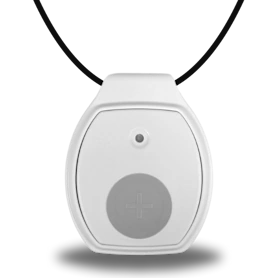
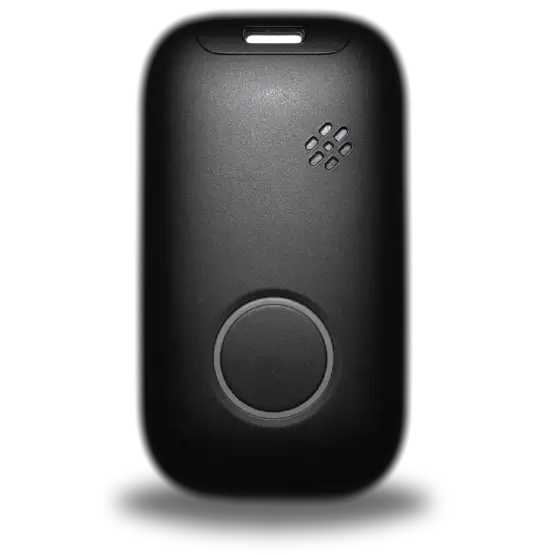
 Get Help With The Push Of A Button
24/7 Monitoring Anywhere In Canada
Usable In The Rain Or Shower
Automatic Fall Detection Available
We have collected 4 things that
will help you live protected and healthy
-

Not sure which device
Take our product quiz!
works best for you? -

Looking for information
Read our blogs!
and tips on senior lifestyle? -

Consider getting medical
At home or on the Go!
alert device to stay safe -

Ready to get your device?
Visiting our order page!
You can order a device by