


Fall Prevention For Seniors: Complete Guide
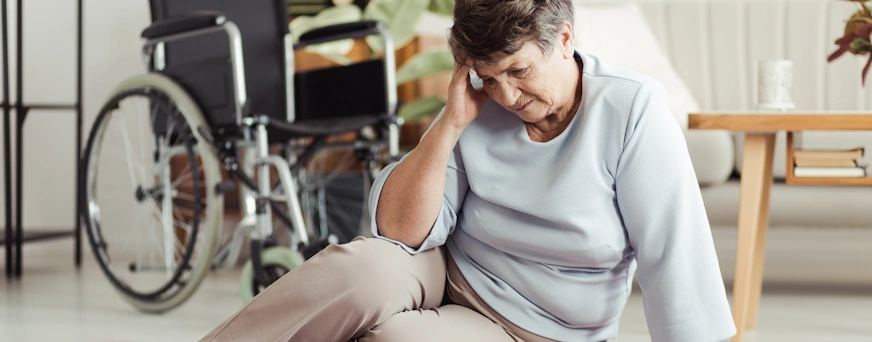
Injuries have been majorly impacting Canadian older adults (especially those who are over 65 years old). It has been observed that every 12 seconds, a senior endures a fall. The main reason behind these physical injuries is sudden falls that lead to frequent hospital appointments and even become fatal in some cases. It has been observed that 34% of the fall related hospitalizations lead to a hip fracture.
These accidental falls cause around 89% of injury related hospitalizations for both men and women. Around 70% of older adults who experienced injury due to accidental falls have sought immediate clinical attention at a hospital emergency room. These accidental falls are not only limited to minor injuries. Research has shown that around 67% of seniors suffer life-threatening injuries if they are not admitted to a hospital within 72 hours.
Furthermore, the death toll due to these injuries among older adults increases up to 51%. Therefore, the best fall prevention for seniors is to improve their balance and strength, review their medications that may be causing these falls, use fall prevention devices, and modify their living space.
Key Takeaways
The fall prevention for seniors guide entails the following guidelines.
- Medication management is crucial to deal with accidental falls among seniors.
- Low-impact balance and strength-building exercises are important for seniors to avoid falls
- Wearable fall detection technologies are an innovative approach towards senior safety.

Life Assure Product Quiz
Take our 30 second quiz and discover which Life Assure medical alert device is the right fit for you or a loved one.

Life Assure Product Quiz
Take our 30 second quiz and discover which Life Assure medical alert device is the right fit for you or a loved one.

Common Reasons behind frequent falls in older adults
The causes of falls in elderly are directly connected to the chronic conditions they mostly suffer from.
Arthritis
It is one of the common reasons behind frequent falls among seniors. Due to arthritis, seniors face extreme joint pain that leads to instability. This makes the legs and knees unable to bear the weight of the upper body, affecting their movements.
Obesity
With age, bone and muscle strength takes a setback. In addition to this, when your upper body, especially the abdomen, hips, and belly, gains weight, it affects body balance and accelerates muscle and joint breakdown, leading to frequent falls.
Fear of Falling
This is one of the most underrated causes of falls in elderly. It does not have any connection with your body strength; rather, it solely depends on your cognitive ability. Seniors often suffer from anxiety that leads them to think they will fall whenever they stand or walk. This increases the risk of frequent trips and slips as mental instability affects the body’s natural posture and movement.
Improper medication review
Older adults are the largest recipients of prescription medications because they struggle with multiple conditions simultaneously. With age, their bodies process multiple disease medicines slowly and become more likely to experience side effects. For example, medications advised for liver and kidney issues and increased body fat may interact with each other, leading to side effects such as falls and injuries. Also, seniors who have anxiety or insomnia are advised to take sleeping pills that cause side effects (dizziness), increasing the risk of falls. Therefore, medication review is crucial to regulate fall prevention for seniors.
Hypertension
Accidental falls are common among hypertensive seniors. When you rapidly switch between postures like getting up or sitting down quickly, it can lead to a sudden blood pressure drop, which leads to dizziness, lightheadedness, and loss of balance. Apart from this, if your blood pressure highly fluctuates on a regular basis, then most likely these are connected to poor balance, which automatically increases the risk of accidental falls and injuries.
Diabetes
Type II diabetes is one of the most common conditions that seniors are facing. The susceptibility to fall related injuries also increases compared to seniors without diabetes. This is because diabetes affects nerves, vision, and the whole body balance system. Therefore, to administer fall prevention for seniors, diabetes levels need to be controlled with exercises and medications.
Simple Home Modifications That Help Seniors Live Safely
Most accidental falls happen in the comfort of their own house, where seniors spend most of their time. Therefore, when considering why seniors fall, modifying the home is the first step that needs to be taken.
Floors, stairways, and hallways
This is the most accident prone zone at home.
- Ensure installing securely mounted handrails on both sides of the staircase.
- Either install motion sensing lights or traditional LED lightbulbs that always brighten up the staircase, hallways, and floor.
- Rearrange carpets with no slip strips under them to avoid accidental slipping.
Bathroom safety
Most of the severe injuries in seniors happen due to accidental falls in bathrooms. Therefore, modifying the bathroom with some additional installations can be an ideal strategy for fall prevention for seniors.
- It is important to mount grab bars inside the washroom, on the outside and inside the bathtub and shower.
- Place non slippery shower mats on the bathroom surface, so even though it gets wet, it does not necessarily become slippery.
- Try to install a walk in bathtub, as it makes it convenient for seniors to get in and out of it without lifting their legs or accidentally stumbling on the tub.
Bedrooms
Although bedrooms are the most well known area for seniors, they often face minor to major injuries.
- First of all, install beds or any furniture that has no sharp edges, which could cause injuries to seniors while walking.
- Also, install bedside night lamps and light switches to avoid falls during nighttime.
- Try to keep your bedroom spacious, so avoid filling it with excessive furniture.
Kitchen
Understanding why seniors do fall in this space helps highlight the immediate need for specific modifications, which improves their safety and independence. The slick surfaces, frequent spills, sharp turns, and high shelves make this space a hazardous place for seniors.
- Refurbish kitchen flooring with a non slip matte finish or place non-slip mats that you are using in bathrooms.
- Always keep frequently used utensils within arm’s reach so that seniors do not fall while getting them from the top of the cabinet.
- Caregivers need to clean up spills immediately.
Outdoor spaces
Not necessarily do these spaces mean roads, cafes, or restaurants, but gardens in your backyard, patios, and entryways are the outdoor spaces posing significant fall risks for seniors.
- Make sure steps or the path leading to your main door are not undulating.
- Non slip material is not just for indoors in your bathroom or kitchen but is also ideal for outdoor stairways.
- Keep your lawns, deck, or porch areas clear of any garbage or debris such as huge fallen branches.
- Grab bars are not only for the bathroom but for any part of your home. For example, near the front gate, so you can grab it for support while locking or unlocking doors, or even stepping up and down the stairs.
Other living spaces
Apart from modifying core areas in your home, some minor miscellaneous changes complete the whole safety net for seniors.
- Keep electrical cords wired up inside the wall, not loose over the walking paths.
- Ensure sofas or chairs are of an adequate height for seniors so that they do not accidentally fall while getting in and out of them.
- While modifying, make sure all furniture around the home is properly assembled to avoid sudden stumbling.
Exercises for Enhancing Balance and Strength among Seniors
As people age, they lose their balance and strength, which can lead to accidental falls when they walk, stand, or move. Specialized Geriatric Services in Toronto’s Fall Prevention Program provides consultation with a geriatrician and physiotherapist to assess people over 65 for their risk of fall-related injury. Doctors have even confirmed that a moderate amount of regular physical activity can improve seniors’ balance, mobility, and strength.
Sideways Walking
One of the basic balancing exercises for seniors to perform every day.
- First, keep your knees slightly bent (but if you feel uncomfortable, avoid it), and stand on your feet.
- After that, slowly and steadily move one foot to the side first.
- After that, move the other one and join with the other leg. Try not to move your hip downwards in the direction of your movement.
- Perform 10 steps from one side of the room to the other. In the middle, if you feel comfortable, drop it.
Simple grapevine
It is also sideways walking, but you need to cross your foot over the other. It is one of the easy exercises to increase balance and prevent elderly fall.
- First, cross your right leg over your left one.
- Afterward, wait for 1 or 2 seconds, then bring your left leg to join it.
- Try to do 5 cross steps on each side.
- If you are unable to maintain balance, then put your hand against the wall for support and stability.
- Take smaller steps and slowly do the exercise. Gradually, you can improve your balance.
Heel-to-toe walk
It is a simple and effective balancing exercise that aims to increase fall safety for seniors.
- First, stand upright.
- Then keep your right ankle or heel on the floor right in front of your left toe.
- Stand like this for 1 or 2 seconds.
- Then again do the same thing with your left heel or ankle.
- While doing so, you need to always look forward and not keep your eyes on the movement of your toes. This will increase your body-mind connection.
- If you feel necessary, you can take support of the wall for stability.
- At least do 5 steps daily. Gradually, when your balance increases, try not to take support of the wall and walk on your own.
One-leg stand
It is a simple balance exercise that focuses on improving stability, strengthening ankle muscles, and preventing accidental falls among seniors.
- Stand straight facing the wall with your hands properly stretched to the front and fingers touching the wall.
- Slowly lift your left leg, level your hips, and slightly bend your other leg.
- Make sure you do not put any additional pressure on either the leg you are lifting or the one on the floor.
- Stay in this position for 5 to 10 seconds or as per your comfort.
- On each leg, perform this 3 times.
Step-up
This exercise aims to increase your flexibility and reduce accidental falls while walking down stairs or crossing over a threshold between rooms. Preferably do it in front of the staircase and take support from the handrail on the side.
- Step up your right leg on the first stair.
- Then, keeping pressure on the right one, step up your left leg to join.
- After that, step down again and come back to the beginning position.
- Slowly, in a controlled manner, perform 5 steps with each leg.
Tai chi for balance
One of the most efficient ways for fall prevention for seniors is to practice tai chi balancing exercises.
- SKeeping a hip distance apart, stand straight and slightly bend your knees.
- Slowly shift your weight from left to right.
- Keep your arms and hands on each side of your hips.
- After that, switch to the other leg.
- Do it around 3 times.
Knee lifts
To prevent injuries from falls, improving lower body strength is extremely important. Therefore, this exercise strengthens your thighs.
- Apart from using handrails and walls as your support system to perform your balance exercises, chair seated positions can also improve body strength.
- After that, keep your hands straight sideways in a resting position. Do not keep them on armrests.
- Slowly contract your quadriceps muscle and lift your leg.
- The distance between your knee and the back of your thigh needs to be 2 to 3 inches off the seat.
- Stay in this position for 3 seconds and then gradually lower your leg .
- Do it 8 to 12 times for each leg. If you feel tired, then do not continue it.
Ankle rotations
This improves your calf strength, highly important for building lower body agility and increasing the intensity of fall prevention for seniors.
- Sit comfortably on a sturdy chair.
- Slowly lift your right leg (to your hip level) off the ground.
- Then, staying in this position, rotate your right foot 5 times each to the left and right.
- Then do it with your other leg.
- Do this exercise for 2 minutes or as per your comfort.
Wall pushups
This increases the strength of your chest and shoulders.
- Keeping a 3-foot distance from the wall, stand straight facing it with your feet shoulder width apart.
- Slowly bend forward and keep your palms on the wall. Try to make a straight line alignment with your shoulders (if problematic, do it as per your suitability).
- Try not to keep your back in an arched or sagging position.
- After that, lower your body toward the wall and then again push back.
- Do it at least 4 to 5 times every day.
Upper back
It relieves tension and improves strength in your shoulders and upper back.
- It is also a seated exercise.
- After positioning yourself comfortably on the seat, keep your feet flat on the ground with your shoulders width apart.
- Then lift your hands up in front of you, level with your shoulders.
- Keep your palms facing outward and the back of the palms pressed together.
- Relax your shoulders.
- Until you feel a comfortable stretch, reach out your fingertips.
- Your back will move away from the edge of the seat.
- Stay in this position for 10 to 30 seconds.
- Repeat as per your comfort. Do not overexert yourself.
How Fall Detection Technology Is Changing Senior Safety
When you want your loved one to be independent while ensuring they get immediate help if any problem occurs, such as tripping over the room threshold, falling down the stairs, or slipping on the bathroom floor, then innovative fall detection technology becomes quite useful. So, keep track of your elderly falls with these wearable devices. Indeed, they are not a replacement for a fall prevention mechanism but genuinely reassure seniors, especially those who live on their own.
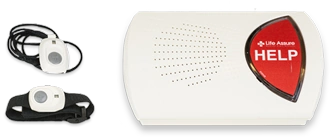
Pendant models
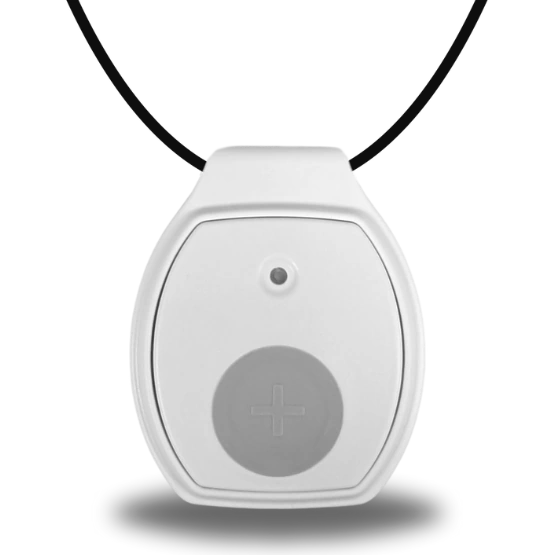
These are the most convenient devices that can be easily operated. Seniors need to wear these pendant devices around their neck like jewelry. When you need help, press the button. If you are not willing to wear it around the neck, make sure you keep it close at all times. This simple technique reduces confusion for the user, family members, and the caregivers.
These devices are designed keeping the practicality of those seniors who neither want to learn about a new watch interface nor remember additional steps (mentioned in smart watches) per day. If arthritis is the main reason behind the difficulty in wearing a band around your wrist, or you have dementia and charging habits become unreliable, then this easy to use pendant becomes quite handy. For seniors who are facing problems with stooped posture or unusual walking, a pendant is a good fit, but ensure that it stays on you all the time.
Watches and wristbands
Devices that you can wear around your wrist easily blend with your life. For seniors who have developed a habit of wearing a watch over the years, they can easily wear this wristband that not only fulfills a clinical emergency quota but also maintains an aesthetic appeal.
These watches have built-in motion sensors that quickly identify sudden hard impacts and also trigger emergency calls, which notify family members or caregivers instantly. These wristbands have accelerometers that can rapidly sense hard falls or drops within a 20 second countdown to nullify false alarms.
Beyond this, it also shares real time location data to the app connected to this watch installed in either a family member's or caregiver’s phone. As these are built with waterproof technology, seniors can easily use them in washrooms.
Clip-on wearables
They are an ideal device for maintaining older adults’ fall safety. They fit perfectly for people who neither want to wear wristbands nor pendants. These are discreet electronic devices attached to any clothing or accessories, tracking regular movement and also alerting the caregivers or family members if the elder falls suddenly.
In these devices, accelerometers (keep tabs on the body’s usual speeding up, slowing down, and changing direction) are combined with a gyroscope (sense whether the body is in an upright position or lying down flat) to monitor all types of motion. Although it creates a bit of distress, as with changing clothes, you need to keep track of these clips as well, which becomes hard for seniors to do alone. But if you are under the observation of caregivers at your own place, then they will keep tabs on these wearables and prepare a safe routine for elders.
Passive sensors in the room
The most advantageous fall detection technology for seniors is these passive room sensors. There is no additional task of remembering or wearing. It is highly beneficial for users who tend to remove any wearable from their body, strictly resist wearing anything that is remotely related to medical appliances, or have cognitive irregularities and are unable to manage these motion wearables. In most cases, families usually install them in high risk areas such as the bathroom, staircase, and bedrooms.
What to do if a fall occurs
The following things need to be done after a fall. In all of these scenarios, immediately call a doctor for clinical assistance.
If you can get up after a fall
Follow these steps carefully.
- First, lie on your side, bend the leg on top, and with the help of your elbows or hands, slowly get up.
- Then pull an armchair nearby or something to sit on and tightly grab it to get up and slowly sit on the chair.
- If you are wearing any wearable device, just press the alert button for help.
If you cannot get up after a fall
Go through these steps so that you can follow them if, in the near future, you find yourself in this situation.
- In this scenario, also call for help with your device.
- If you do not have a wearable device on, use something heavy or noisy like your cane or walker to bang and call out for help.
- Try to remain in a comfortable position till the help comes.
If you witness a senior accidentally fall
Learn about what to do when you have to help someone in this situation.
- Quickly bring a chair beside him/her.
- Then help the person to turn on one side and bend the leg on top so that he or she is in a semi seated position.
- After that, stand behind the person, firmly hold his/her hips, and help them into a kneeling position, keeping their hands on the chair in front of them.
- Guide them to hold the chair for support and place the stronger leg in the front to get up.
- At the end, slowly help the person stand and then turn on your side and sit on the chair.
Fall prevention checklist
Apart from being physically active, enabling modifications at home for senior safety, and using fall detection devices, following this fall prevention for seniors checklist helps them to live safely and independently.
- Wear well fitting closed shoes with nonslip soles. Also, do not wear worn out slippers or shoes.
- Always undergo a comprehensive eye exam at least once every 6 months. Due to vision impairment (due to cataracts, macular degeneration, diabetic retinopathy, glaucoma, and presbyopia), seniors often face major falls.
- Enroll in a fall prevention program to seek professional clinical guidance and exercises to practice regularly.
- Always keep emergency numbers within your reach, like beside your landline or saved in your mobile phone.
Fall prevention for seniors can be managed with thorough clinical intervention and lifestyle changes. These changes range from practicing balance and strength improving exercises to using fall detection wearable devices, which help caregivers and family members stay alert to any accidents. Furthermore, understanding what to do after a fall is also crucial to dealing with this kind of situation.
Sources:
https://www.canada.ca/en/public-health/services/health-promotion/aging-seniors/preventing-falls-injuries-older-adults.html
https://www.healthline.com/health/everyday-fitness/senior-workouts#balance-exercises
https://www.nhs.uk/live-well/exercise/balance-exercises/
https://pmc.ncbi.nlm.nih.gov/articles/PMC8390322/
https://www.nia.nih.gov/health/falls-and-falls-prevention/preventing-falls-home-room-room
https://sunnybrook.ca/departments/falls-prevention-program-geriatric-services/
https://www.canada.ca/content/dam/phac-aspc/migration/phac-aspc/seniors-aines/alt-formats/pdf/publications/public/injury-blessure/falls-chutes/falls-chutes-e.pdf
https://www.healthlinkbc.ca/healthlinkbc-files/seniors-falls-can-be-prevented
Disclaimer:
The content provided in this guide is for informational and educational purposes only. Accidental falls cause around 89% of injury-related hospitalizations for both men and women, and the death toll due to these injuries increases up to 51% among older adults. Because around 67% of seniors suffer life-threatening injuries if not admitted to a hospital within 72 hours, it is highly advised to immediately call a doctor for clinical assistance after any fall. Seniors should undergo comprehensive eye exams every 6 months and enroll in a specialized fall prevention program to seek professional clinical guidance and exercise routines. Always consult with a healthcare provider or geriatrician before beginning any new physical activity or making changes to a medical routine.

 Get Help With The Push Of A Button