


Hip Pain in Seniors: Causes, Treatment, and When To See a Doctor

Life Assure Product Quiz
Take our 30 second quiz and discover which Life Assure medical alert device is the right fit for you or a loved one.

Life Assure Product Quiz
Take our 30 second quiz and discover which Life Assure medical alert device is the right fit for you or a loved one.

How Common is Hip Pain?
Persistent pain in the hip is a common condition affecting individuals from their late 20s to older adults. Hip pain can occur from conditions related to bones, cartilage, muscles, tendons, or ligaments.
Around 14 to 15% of adults over 60 experience recurring hip pain. In fact, older women are more prone to these conditions than men.
The chronic, debilitating pain leads to sore hips where your regular activities are affected, robbing you of mobility. The pain is so extreme that it even affects sleep, and your entire lifestyle gets disrupted.
Common Causes of Hip Joint Pain among Seniors
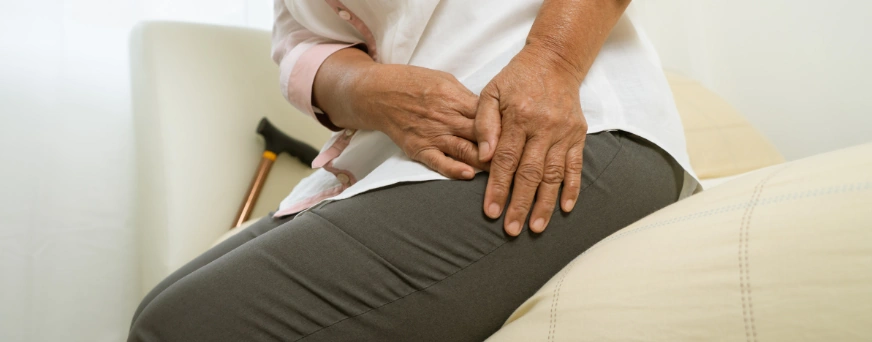
Repetitive Strain Injury
This type of injury, also called a repetitive stress injury, is mainly caused by repetitive motion of muscles, tendons, or nerves around your hips. This occurs when you constantly perform any kind of movement or motion that hurts your hip, like sitting for a prolonged period.
It is a slow degenerative process that picks up its pace when joints, bones, and tissues get weaker with age.
Hip Trauma Forming Cysts
Hip trauma is an important factor behind the development of cysts. Due to injuries such as fractures or dislocations, the structural integrity of the hips is disrupted, which causes stress and joint degeneration.
When the body is unable to heal the damaged area on its own, a cyst is formed. It further deteriorates if the affected area undergoes repetitive microtrauma. Therefore, whenever you experience any accident that affects your health, visit a doctor for consultation.
Sciatica Pain
As the lower part of your spine is interconnected to the hip, conditions affecting the lumbosacral spine lead to hip joint pain. Usually, when you feel pain in the left hip area, it indicates sciatica that results from a herniated disc or spinal stenosis.
In this condition, the longest nerve in our body, the sciatic nerve, located in the lumbar spine, gets affected, causing vulnerable pain which may radiate to the hip and also to the legs.
Synovitis
This mainly occurs with age due to wear and tear of cartilage and ligaments. The synovial joint has a tissue membrane called the synovium. The fluid present within this tissue acts as a lubricant in the joint and prevents degeneration of the cartilage when joints are in motion.
But due to sudden injuries, osteoarthritis, and rheumatoid arthritis, the synovium swells up, causing terrible pain in the hip joint.
As it is also common among people with arthritis, the excessive growth of these membranes is considered an outcome of a dysfunctional immune response. Here, the body mistakenly considers its own cartilage as foreign pathogens and attacks them.
Self-Care and Home Treatment for Relieving Hip Pain Discomfort in Seniors
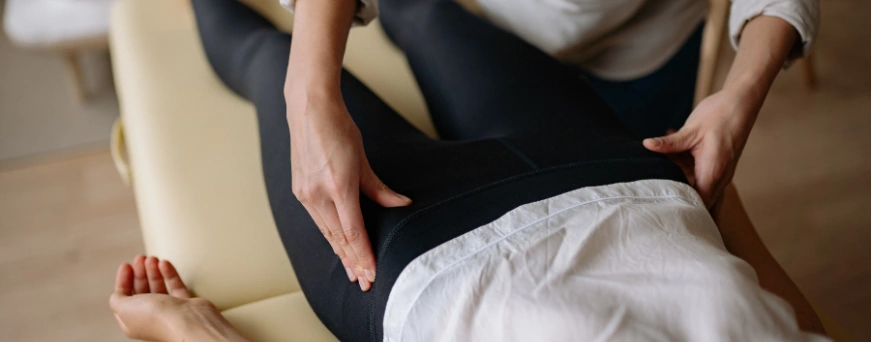
You may not need a doctor’s appointment if your hip pain is mild. With some home treatments, you can recover from this condition.
Below are some basic and effective self care treatments you can initially administer for your sore hip in the comfort of your home to see if the situation improves. However, if these treatments don’t work, you should consult the doctor.
Cold Compression
When your hip gets hurt, the most immediate action you can take is to apply cold compression. You can use ice packs readily available in pharmacies, or you can take some ice cubes in a towel and apply them to the injured area.
Try to gently apply the ice pack on your own or seek help from someone without stressing your hip joint. This ice compression helps to reduce the inflammation caused by the hip injury.
Complete Rest
Hip pain in older age due to injuries, muscle tension, or infection is concerning. Therefore, taking adequate rest is the most viable option here.
So, keep yourself refrained from doing regular activities that require bending or putting pressure on your hip. Also, while resting or sleeping, make sure your affected side does not come under any stress.
Pain Relievers
For minor injury, you can have pain relief medications or apply ointments. Medications such as ibuprofen or acetaminophen are proven effective. There are ointments, gels, or patches available that contain pain subsiding ingredients which can be applied directly on the affected area.
Although the efficacy rate of these medications and ointments is temporary, and that too for minor injuries, there are some other things you need to be aware of. Pain relievers have side effects, especially for seniors.
Therefore, if you see that despite having medications and applying ointments, the hip pain remains the same or gets worse, stop them immediately and consult a doctor.
Hot Water Bath
A warm saltwater bath can help relax the hip muscles contracted due to the injury. Besides, gentle stretching is also proven beneficial for reducing pain. While doing the exercise, do not overexert yourself. Do what comes naturally to you, as it may degrade your condition.
When to See a Doctor for Your Hip Pain?
Pain in your hip comes with warning signs signaling the need for medical intervention. Therefore, if you experience pain and/or changes in movement and appearance of your hip, it will help to prevent further degeneration.
Below, some warning signs are highlighted that indicate immediate doctor consultation.
Accidental Fall Related Hip Injury
When you feel severe pain lingering around your hip after any accidental fall, do not ignore it. This could be the aftereffect of a broken bone or a dislocation in the hip joint. You might feel a sharp and intense pain, especially when you are trying to stand up or simply strolling around.
In certain cases, you might feel pain in the left hip area, which may mean muscle tension or tendon injury. If the pain worsens for more than 4 to 5 days, instead of applying any pain relief ointments on your own, visit a doctor.
If you delay consulting the doctor, not only does the pain worsen, but this also increases the probability of permanent hip damage.
Swelling, Deformity, and Lack of Mobility
Hip pain can also take its root because of swelling, which indicates internal bleeding or possible infection within the hip joint tissues. So if you notice any changes in shape around your hip area, then it could be a prominent symptom of a dislocated joint or broken bone.
This pain becomes so severe that you are unable to move either your hips or legs, which indicates a degraded condition. After an injury, if your hip’s appearance changes or your leg seems shorter, then it could be a serious bone or joint problem.
But this situation can be managed if you go for a doctor’s visit. Immediate expert clinical care will prevent the hip bones, muscles, and ligaments from further damage.
Problem with Bearing Weight or Walking
It is severe if, due to prolonged hip pain, you feel discomfort while walking or bearing any weight. This mostly happens after any kind of muscle or ligament injury due to sudden falls. Sometimes, with consistent rest, you can get relief from the pain.
But if you still face trouble while walking, then get checked immediately. Without timely doctor’s intervention, this pain will worsen and damage your hip joints, indicating the need for prolonged rehabilitation.
Sudden Hip Pain Without Injury
If you experience a high fever, sudden chills, redness, or a warm feeling along with severe pain in the hip without any physical injury, then there is a possibility of an infection within the joint or bone area.
This bone infection (osteomyelitis) spread quickly, damaging the delicate tissues in the bones, which should be treated on an urgent basis. If you feel a tingling sensation or numbness in your leg along with pain in the hip, then it indicates a severe nerve problem.
If all these symptoms occur either separately or collectively, medical evaluation is necessary. So, when you feel sudden hip pain without injury, do not ignore it with the thought that it will subside soon.
The pain could be due to these infections and nerve-related issues, which degrade faster than any injury-based hip joint problem if left untreated.
Medical Treatment Options for Hip Joint Pain in Seniors
Severe hip joint pain indicates multiple severe musculoskeletal conditions that require proper medical intervention. Here are some significant surgical and non surgical treatment procedures to get rid of the pain.
Hip Osteotomy
This surgical procedure treats two conditions: hip impingement (hip joint stiffness and pain) and hip dysplasia (hip dislocation leading to early onset of osteoarthritis). Either an area of the pelvis or the femur, and rarely in severe cases, both are cut, then repositioned and properly fixed for proper hip function.
Hip Arthroscopy
This surgical procedure is also performed to treat hip impingement, the primary cause of osteoarthritis, commonly seen among women above 60. It is also administered to treat hip labral tears, removing loose fragments from the cartilage developed due to injuries.
Alongside these conditions, hip joint inflammation and hip bone spurs also benefit from this treatment procedure.
Cartilage Repair and Regeneration
This cartilage repair surgical procedure regenerates the cartilage around the hip joint, especially where it has been damaged due to decades of wear and tear. In this surgical intervention, synthetic adjuncts are used to successfully regenerate articular cartilage.
This is mainly done because older adults lose the ability to grow new cartilage on their own. But not every senior with this condition is eligible to undergo this surgery. The patient’s knee needs to be in a healthy condition, and there should not be any sign of cartilage loss due to arthritis.
NSAIDs
It is also called non steroidal anti inflammatory drugs, which are used for decreasing internal flare ups causing a sore hip. These medications are used for treating osteoarthritis, rheumatoid arthritis, and other painful conditions.
Two kinds of NSAIDs are available, including selective and nonselective, which can help to ease pain and inflammation.
Platelet Plasma Treatment (PRP)
As many older adults prefer a non surgical approach to treat hip pain and inflammation, regenerative medicinal approaches like PRP therapy work as an ideal solution.
These are biologic treatments that help to improve the hip joint pain-related conditions and also have the credibility to heal associated musculoskeletal problems.
The PRP therapy is performed by extracting the patient's own blood. Platelets are the blood cells that support the healing process. So, these platelets are injected into the affected site.
In these platelet rich plasma injections, proteins are present, which work in reducing inflammation, pain, and also heal tissues.
This treatment is mainly used for moderate hip osteoarthritis. Since it uses the patient’s own blood, it is one of the safest and most effective hip joint pain treatments.
Cell-Based Therapies
These therapies are almost similar to platelet rich plasma injections, but here, different human cells are used.
For example, the bone marrow aspirate concentrate is such a type of treatment where bone marrow is collected from the hip bones of the patient and then injected into the affected area.
Preventive Measures Against Hip Joint Pain in Seniors

Most seniors experience sore hips because of sudden falls, causing severe damage. So following these precautionary measures can help them to prevent hip injuries.
- Heavyweight seniors are more prone to falls. This is because excess weight can add more pressure on the hips and lower back, affecting body balance. Therefore, weight management is the key to preventing hip joint pain associated with aging.
- With age, seniors lose body flexibility that limits basic mobility. Therefore, practicing low impact exercises (tai chi or chair yoga) regularly can strengthen muscles around the hip joint, improve flexibility, and help them to overcome stiffness. But instead of fixing exercise routines on your own, it's better if you seek a clinical opinion.
- Improper posture could also be the reason behind persistent stress on the hips. So practice exercises that help in building good posture by keeping your hips, shoulders, and back properly aligned.
- Due to years of wear and tear, hip joints become more vulnerable to external pressure in aged adults. Therefore, avoid lifting heavy objects that strain your hip.
- As in most cases, sudden hip pain without injury indicates bone infection, so seniors need to properly take care of their wounds. This is because bacteria causing osteomyelitis enter the bloodstream through open wounds. Besides, diabetic seniors are very vulnerable to this condition, so proper foot care is crucial for them.
Sources:
https://www.mayoclinic.org/symptoms/hip-pain/basics/when-to-see-doctor/sym-20050684
https://my.clevelandclinic.org/health/symptoms/21118-hip-pain
https://www.webmd.com/healthy-aging/features/hip-pain-as-you-age
https://www.drmangino.com/post/when-to-see-a-doctor-for-hip-pain-causes-signs-and-treatment
https://www.hss.edu/health-library/conditions-and-treatments/list/hip-pain-causes
Disclaimer:
Important Medical Disclaimer: The information provided on this page is for educational purposes and initial self-care guidance only. Home treatments and pain relievers offer temporary efficacy for minor injuries and carry potential side effects for seniors. If your hip pain persists, worsens, or is accompanied by warning signs such as an inability to bear weight, visible deformities, or signs of infection (like fever and chills), stop self-treatment immediately and consult a qualified healthcare professional. Do not delay medical attention, as timely clinical intervention is necessary to prevent permanent joint, bone, or tissue damage. Always seek a professional clinical opinion before establishing an exercise routine.

 Get Help With The Push Of A Button