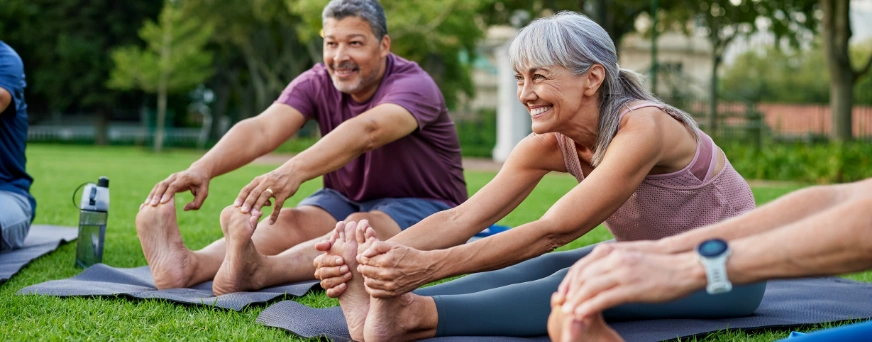


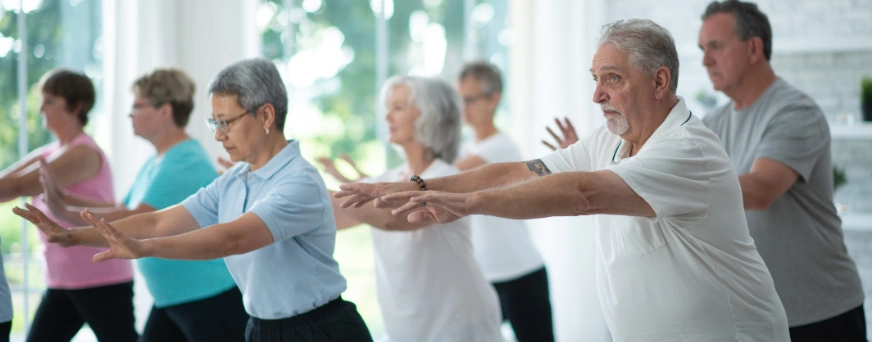
Flexibility Exercises And Stretches For Seniors
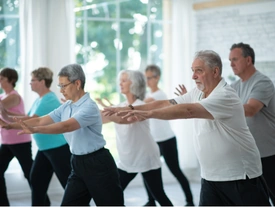
With age, maintaining vitality becomes essential. While people usually check up on heart, bone, and muscle health to measure their fitness, they often do not take flexibility into consideration. When people get older, it's not just their organs that degrade; flexibility also takes a backseat. Therefore, maintaining proper flexibility is extremely significant as it can affect your overall health and mobility. Research studies have claimed that the shoulder flexibility of older adults decreases by around 5 to 6 degrees every ten years. The solution is to remain active, which helps to lead healthier and happier lives. Therefore, practicing flexibility exercises will improve your ability to continue regular activities safely and independently.
Key Takeaways
Flexibility exercises need to be a routine activity for seniors.
- Practice standing, sitting, or floor exercises as per your capacity.
- A 15 minute workout session is enough for a senior to remain active.
- Always prioritize ensuring safety precautions before exercises.

Life Assure Product Quiz
Take our 30 second quiz and discover which Life Assure medical alert device is the right fit for you or a loved one.


Life Assure Product Quiz
Take our 30 second quiz and discover which Life Assure medical alert device is the right fit for you or a loved one.

Significance of flexibility for seniors
Flexibility is the grease that keeps the body moving seamlessly. If your body is flexible, it will work as a coordinated unit.
Enhanced Range of Motion
Flexibility exercises for seniors, such as stretches and yoga, help promote joint mobility and strengthen muscles. This collaborative effort helps seniors maintain and also improve their range of motion. When you practice these exercises daily, you will no longer face tremendous pain in reaching a jar or glass from a high shelf or bending down to pick something up, and not even getting in and out of bed, chair, or couch.
Injury Prevention
When your muscles and joints become more flexible, they will be less vulnerable to occasional sprains, strains, or even accidental falls. Not only do these muscles and joints prevent you from losing balance and falling, but even if you get injured in rare cases, muscles can absorb the impact of a trip or a stumble, leading to a minor bruise, saving you from a severe hip or knee fracture.
Alleviation of Aches and Pains
As you age, flexibility decreases, and sudden pain in your muscles becomes common. This is due to tight and rigid muscles pulling on joints. There are stretches for seniors that can help to eliminate tension in specific pain points such as the lower back, neck, hips, and knees.
Improved Posture and Balance
Tight chest structure and hip muscles become a common reason for a back slouch. Flexibility workouts can help seniors stand straight without leaning forward. This shifts your center of gravity back to a stable and safer position that does not affect your posture.
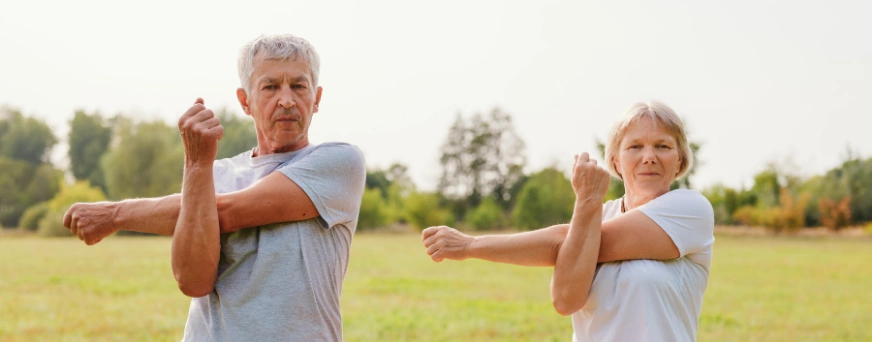
10 standing stretches for seniors
Older adults face several challenges doing any work while they are standing. Therefore, practicing some standing exercises will form the base of functional fitness. Complete all these flexibility exercises within 30 to 60 seconds and do them at least 5 to 10 times.
1. Standing Quadriceps Stretch
This exercise gradually reduces lower back and knee tension.
- Stand straight behind a steady chair, keeping both hands on its back.
- Then just keep one hand on the chair.
- Bring one leg behind you and lift it up with the other hand.
- Hold this position. Switch legs if you feel straining on one leg.
- If you feel uncomfortable bending your knees, then don’t bend the leg deeper.
- Switch legs if your body permits.
2. Standing Adductor Stretch
This exercise helps improve inner thigh strength, groin muscles, and hip joints.
- Stand straight with the support of the chair placed in front of you.
- Then place one foot away from the other and ensure your toes are facing outwards.
- Then gradually lean to one side, bend your knees, and keep this position intact.
- Don't put extra pressure; whatever comes naturally to you, just do that.
- Then repeat it on the other leg.
3. Standing Calf Stretch
This exercise helps you improve flexibility in your calves, minimizes muscle tension, and prevents occasional injuries.
- Stand straight, holding a chair.
- Then step one leg back and ensure your toes are facing front while doing the exercise.
- Staying in this position, bring your knee to the front and keep your ankles right on the floor all the time.
- Hold this position for a couple of seconds or as long as your body permits.
- Then, if you are comfortable, switch to the other leg, or else you can take some rest in between.
4. Knee Taps
It mainly targets lower abdominal and core muscles.
- You may not need a chair to do the exercise, but keep it nearby if you want to sit and take a break for a couple of seconds.
- Stand straight and keep both hands together in front of you.
- Lift one leg, bend it, and make sure that your hands touch your knee.
- Then slowly put your leg on the floor while your knee is slightly bent.
- Repeat the same format with another leg. If you can do it instantly, go for it, or else take a rest.
5. Toe Taps
To increase your core stability and hip flexibility, practice this exercise.
- Stand tall and lift one hand above your head.
- Then slowly bring your leg up and your opposite hand down so that you can tap on the toe.
- Then again bring the leg back on the foot.
- Repeat with another leg.
- As it requires adequate body balance, it's better if you stand up against the wall, taking its support.
6. Hip Hinges
It is one of the effective flexibility exercises for seniors as it strengthens your back muscles and helps you bend comfortably.
- Stand tall and keep one leg slightly backward.
- Then slowly lean forward while you keep your leg straight and try to stand on the other leg.
- Come back to the beginning position and again try with the other leg.
7. Hip Hinge to Calf Raise
Calves are a core part of the lower body posture along with the knees. Therefore, strengthening calf capacity helps to improve your flexibility and mobility.
- Stand straight and keep a shoulder width distance between your legs.
- Slowly lean forward, but ensure that your back does not slouch.
- After that, come back to the starting position.
- Then lift your heels or ankles off the floor.
- After that, come back to the original position and repeat it.
8. Lateral Leg Raise
One of the common flexibility exercises that helps strengthen hip abductors and core muscles, which eventually improves body balance.
- First, stand straight.
- Then, by putting your entire body weight on one leg, lift your other leg to the side as high as you are comfortable.
- Stay in this position for a couple of seconds, then come back to the main position.
- If you are comfortable, then only continue with another leg; otherwise, it's enough for one day.
9. Back Leg Extension
This exercise improves balance and loosens up rigid hip joints, making them easy and functional.
- Stand straight, keeping one leg slightly backward.
- Extend the leg as much as you can and stay for a while, but do not push yourself over the edge.
- Come back to the starting position and try with another leg.
10. Standing Child’s Pose
It's a popular yoga pose that is easier on your knees and does not require lying down on the floor.
- Stand in front of a sturdy table or countertop.
- Place your hands on the table.
- After that, take a few steps back as you lower your chest downwards, hinging at your hips.
- Keep your hands straight, and when you bend, keep your head between them.
- If you find it difficult to bend your head downwards, do it as much as your body permits you.
- Stay in this position for a while, but whenever you feel any discomfort, back out slowly.
- After that, gradually come back to the starting position.
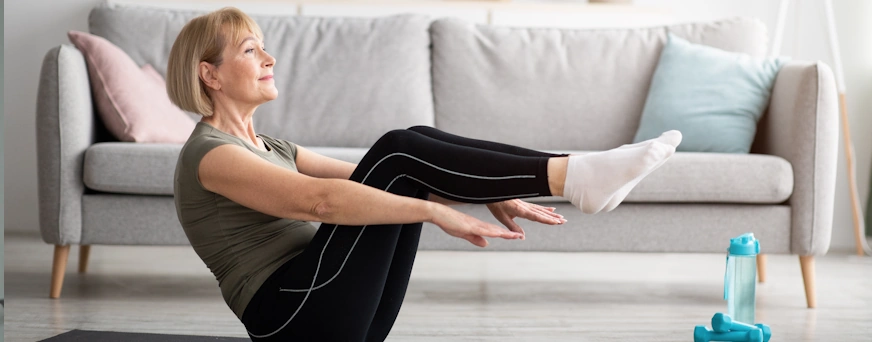
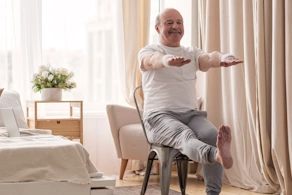
8 seated stretches for seniors
It is absolutely fine if you find it difficult to perform standing exercises even with a chair or table support; that's why there are some seated stretches for seniors which you can practice comfortably without causing any further injury. Do these exercises within 10 to 30 seconds at least 5 to 7 times.
1. Neck Extension Stretch
This exercise helps to improve cervical flexibility, restore natural spinal movements, and release tension from the upper back and shoulders in seniors.
- Take a sturdy chair and sit comfortably.
- Keep your back straight and shoulders back and down.
- Now, comfortably, bring your head to the back and look up to the ceiling. Do not cause any pain while pushing your head backward.
- Stay in this position and then, after a couple of seconds or to your limit, come back to the original position.
2. Chest Stretch
This exercise helps seniors improve upper body posture, mobility, and flexibility.
- First, sit straight and comfortably on the chair, keeping your shoulders back and down.
- Raise your arms straight up in front of you, and make sure their position aligns with the floor.
- Now shift your hands sideways and pull them backward without straining, and then squeeze your shoulder blades together while staying in this posture.
- If you face problems holding in this position, you do not need to keep your hands in parallel to the floor; you can lower them a bit down as per your comfort.
- Stay in a comfortable position and rest for a while.
3. Thoracic Extension Stretch
One of the most effective seated flexibility exercises that helps in improving upper back flexibility, helps seniors stand straight, and minimizes slouching that becomes common due to age.
- Sit straight and comfortably on the chair without leaning back, but keeping your shoulders in the back and down position.
- Now slowly lift your hands and place them on the back of your head.
- While doing so, maintain straight posture and try to extend your upper back over the chair.
- If you see that putting your hands on the back of your head is causing additional discomfort, then you can keep them on your chest.
- Hold this position for a while and then rest.
4. Shoulder & Arm Overhead Stretch
With age, spinal posture gets affected, making this exercise one of the most effective stretches for seniors.
- The seating position is the same as the previous exercise.
- After positioning yourself, interlock your fingers and then keep your hands in front of you.
- After that, raise your hands above your head, pointing to the ceiling.
- Don't push yourself here; stretch as per your comfort.
- Hold this posture for a while and then come back to the original position.
5. Lumbar Extension Stretch
This helps older adults reduce persistent stiffness from sitting, improve their posture, and bend safely.
- Sit straight and comfortably in the middle of the chair.
- Place your palms on your lower back and lean forward, and while doing so, ensure you feel a stretch on your lower back.
- If you cannot put your palms on the back, you can also keep the back of your hands.
- Hold it for a few seconds and then rest.
6. Seated Hip Flexor Stretch
One of the most important flexibility exercises, helping stretch and relax the tight hip flexor muscles, improving flexibility while sitting, bending, and walking.
- Sit straight on the chair and feet flat on the ground
- Now, put one leg beside your chair.
- If comfortable, shift a bit towards the side where you have placed your leg beside the chair.
- After that, stretch it as much as possible, but make sure your knees and toes are facing forward.
- Stay in the upright position and try to reach your leg as far back as possible, while holding the stretch.
- Hold still and then come back to the first position.
7. Seated Hamstring Stretch
If you have terrible lower back pain, this can help.
- Sit at the edge of the chair (make sure you do not fall).
- Then stretch your leg in front while your feet face on the floor.
- Keep your hands on the thigh and lean forward and hold.
- Then come back to the original position.
8. Seated Cat Cow
Usually done on the yoga floor, but you can do it easily on the chair. Here, with the arching and rounding movements, improve mobility in the muscles along the spine, neck, hips, and pelvis.
- Sit on the chair in an upright and comfortable position.
- Then clasp your hands tightly and place them on the back of your head.
- Slowly bring your chest to the front and head towards your thighs.
- Keep tabs on your breathing capacity during the exercise.
- Then slowly extend your shoulders and head towards the top of the chair and arch your back.
- Do not overexert yourself and breathe normally.
- After this, come back to a normal sitting position.
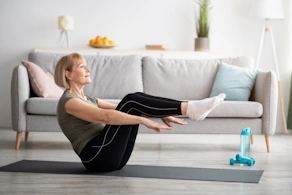
4 floor stretches for seniors
Here are some floor stretches for seniors who face discomfort in doing conventional exercise such as running or weightlifting. Do these exercises for around 30 to 60 seconds and also 5 times or at your comfort level.
1. Knee Rocking Exercise
This exercise helps you rotate your hips, lower back, and upper back comfortably.
- Lie on your back on a yoga mat, bend your knees, and keep your feet flat on the ground.
- Keep your knees together and let them rock one side and then towards the floor.
- While your knees are moving, make sure your shoulders and arms are right against the floor.
- Then bring your knees to the center before you start rocking to the other side.
2. Glute Bridge
This exercise mainly targets the glutes, improving balance and preventing falls.
- Lie on your back and keep your knees bent and feet flat on the floor.
- Now squeeze your glutes and lift your hips off the floor.
- Hold this for a couple of seconds and then gradually lower it down to its beginning position.
- Repeat it for a couple of seconds.
2. Side Plank
Strengthen your spine and improve balance
- First, lie on the floor on your side with your legs extended straight and stacked on top of each other.
- Then keep your elbow just under the shoulder and slowly lift your hips off the floor, making a straight line. If you face trouble keeping it in a straight position, you can curve a bit.
- After remaining in this position, lower your back down.
3. Lying marches with Ball
This helps in strengthening the abdominal muscles and hip flexors.
- Lie on the floor with your back on the surface of the floor.
- Keep a small pillow between your knees.
- Then slowly lift one foot off the floor while slightly keeping the knee bent and gradually bring it down.
- Repeat it with the other leg in the alternating position.
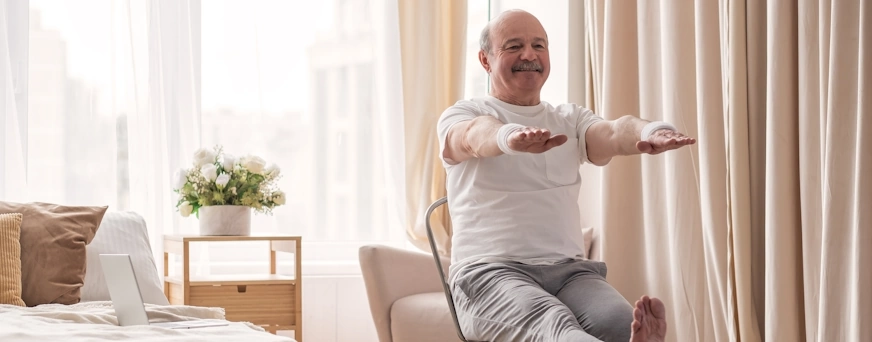
Full body 15 minute workout for seniors
You already came to know about the best flexibility exercises for seniors; now follow this 15 minute workout regimen daily for effective outcomes.
Warm up (2mins)
Before diving into the main practice, do some warm ups such as shoulder movements on both sides, lifting both legs up and down, and gently tapping on your toes.
Standing Exercises (3 minutes)
Choose any of the 3 to 4 exercises and practice them daily for 1 minute. You can go for Standing Quadriceps Stretch, Standing Adductor Stretch, Standing Calf Stretch, and Knee Taps.
Seated Exercises (4 minutes)
Practice Neck Extension Stretch, Chest Stretch, Thoracic Extension Stretch, and Shoulder & Arm Overhead Stretch each for 1 minute. You can also choose other exercises discussed as per your comfort.
Floor Exercises (3 minutes)
Practice Side Plank, Lying Marches with Ball, and Glute Bridge for approx 1 minute each.
Cool down (1 minute)
Sit on the chair or the floor with a back support and take deep breaths and relax for a while before wrapping up.
Safety precautions for seniors while doing flexibility exercises
Below are 7 ways that can help you stay safe while doing the flexibility exercises.
- Do not rush yourself into doing exercise; rather, gently start your sessions.
- Make sure you are doing exercise on a non slippery carpet.
- Always warm up first before beginning an actual workout session.
- Keep a water bottle with you and take some breaks in between to remain hydrated.
- Try to do it indoors and in a cool environment.
- Dress yourself in fitting, breathable clothes.
- Above all, know your limit instead of blindly following workout session timings.
Flexibility plays an important role in improving balance, minimizing stiffness, and preventing accidental falls (one of the core reasons for injuries among seniors). Flexibility not only supports your physical health but also builds the foundation of your independence. You can do regular chores and live freely without persistent joint or back pain afterward. Daily flexibility exercises can simply help you navigate your home confidently.
Disclaimer:
The information provided in this article, including all flexibility exercises and 15-minute workout routines for seniors, is intended solely for educational and informational purposes and does not constitute professional medical advice. Always consult with a qualified healthcare physician or physical therapist before starting any new fitness regimen. By engaging in the standing, seated, or floor stretches described herein, you acknowledge that you are doing so voluntarily and assume all associated risks of injury. The author, publisher, and website disclaim any liability or responsibility for personal injury, property damage, or other loss resulting directly or indirectly from the use or misapplication of this content. Readers are strictly responsible for prioritizing their own safety precautions, working within their physical limits, and immediately stopping any activity that causes pain or discomfort.


 Get Help With The Push Of A Button